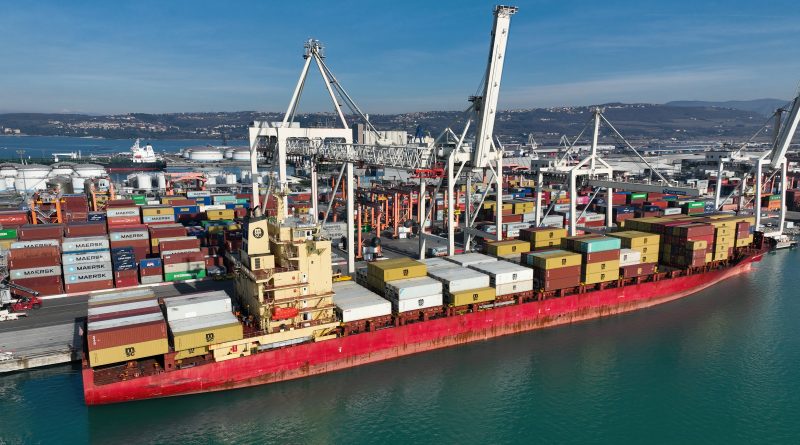
The World Is Redrawing Its Economic Map—And Most People Haven’t Noticed Yet
The next global superpower may not win with tanks.
It may win with semiconductors.
Or lithium.
Or artificial intelligence.
The world is changing so quickly that many people are struggling to keep up.
One week the headlines are about missiles in the Middle East.
The next, they’re about trillion-dollar AI companies.
Then come new tariffs, supply chain disruptions and another warning that the global economy is slowing down.
At first glance, these seem like unrelated events.
They’re not.
They’re pieces of the same puzzle.
This month, the International Monetary Fund lowered its global growth forecast for 2026 to 3.0%, citing geopolitical tensions, higher energy prices and persistent trade uncertainty. Yet, despite the turbulence, economists still expect a modest rebound in 2027 as investment in artificial intelligence continues to drive growth.
Meanwhile, governments are racing to secure industries they now consider matters of national security.
Microchips.
Battery minerals.
Energy.
Rare earth metals.
Data centres.
Artificial intelligence.
The age of cheap globalization is giving way to something more strategic.
Countries are increasingly asking one question:
“What happens if we can no longer rely on someone else?”
That question is reshaping investment decisions from Washington to Beijing, Brussels to New Delhi.
For Kenya, these shifts matter more than many realise.
A disruption in the Strait of Hormuz can push up fuel prices in Nairobi.
A trade dispute between the United States and China can influence the cost of imported machinery.
An AI boom in Silicon Valley can increase demand for African data centres and digital talent.
The world has become too connected for distant crises to remain distant.
Perhaps that is the defining lesson of 2026.
Borders still exist.
But economic consequences travel much faster.
The countries that thrive over the next decade will not necessarily be the biggest.
They will be the ones that adapt the fastest.