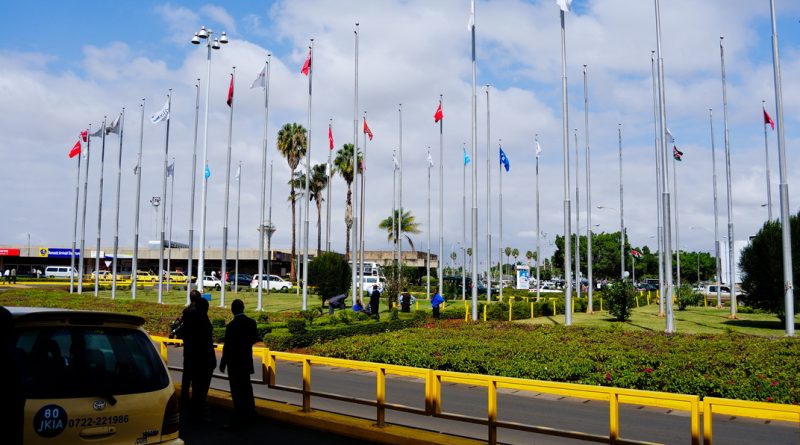
The Sh154 Billion Bet: Why the Expansion of JKIA Is About Far More Than an Airport
Every generation has its defining infrastructure project.
For one generation, it was the Thika Superhighway.
For another, it was the Standard Gauge Railway.
Now, attention has shifted back to Kenya’s busiest gateway—Jomo Kenyatta International Airport.
The government has signed a US$1.2 billion (approximately KSh154 billion) agreement to expand JKIA, a project expected to almost triple passenger capacity from 7.5 million to 22 million annually. Financing is expected to come from the Trade and Development Bank and the Africa Finance Corporation, while construction will be undertaken by China Road and Bridge Corporation.
On paper, the numbers are impressive.
A new terminal.
Modernised facilities.
Expanded aircraft parking.
Improved cargo handling.
Thousands of jobs during construction.
But Kenya has heard big promises before.
That is why investors, manufacturers and exporters are asking a different question.
Will this investment actually make Kenya more competitive?
That answer matters.
Every extra hour cargo sits on the ground costs exporters money.
Every delayed passenger creates congestion.
Every airline deciding between Nairobi, Addis Ababa and Kigali looks at efficiency before patriotism.
Africa is becoming increasingly competitive.
Ethiopia has spent years strengthening Addis Ababa as a continental aviation hub.
Rwanda continues investing heavily in Kigali’s aviation ambitions.
Kenya cannot assume its regional leadership will simply continue.
It must be earned.
For exporters of flowers, fresh vegetables, pharmaceuticals and high-value manufactured goods, a faster airport is not simply convenient.
It is economic infrastructure.
Yet history also teaches caution.
Major infrastructure projects only create lasting prosperity when they stimulate private investment around them.
Hotels.
Warehousing.
Cold-chain logistics.
Conference tourism.
Manufacturing.
Without those multipliers, even world-class airports risk becoming expensive monuments.
The expansion of JKIA is therefore about much more than concrete and glass.
It is a test of whether Kenya can convert public infrastructure into private-sector growth.
If successful, future generations may remember this as the project that strengthened Nairobi’s position as East Africa’s commercial gateway.
If not, it will simply become another impressive building with an expensive price tag.