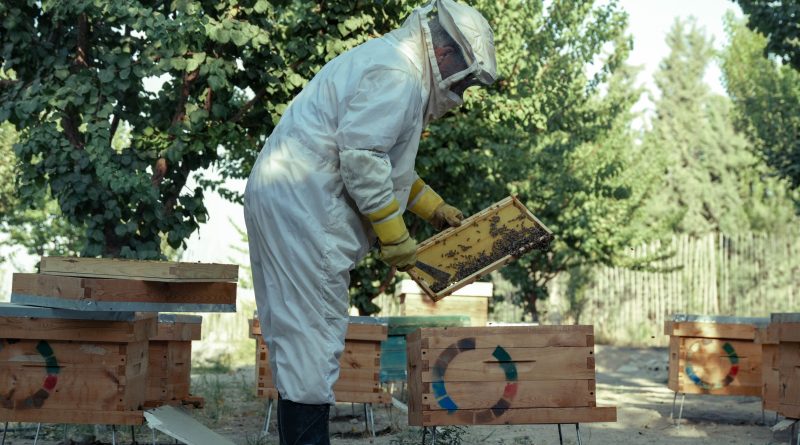
The Quiet Revolution Inside Kenya’s Beehives: Why Honey May Become the Smartest Agribusiness Bet of the Decade
Most people look at a beehive and see one product.
Honey.
Experienced beekeepers see something entirely different.
Pollination.
Beeswax.
Propolis.
Royal jelly.
Queen breeding.
Crop productivity.
And perhaps most importantly…
A business that doesn’t require hundreds of acres to succeed.
In a country where land is becoming increasingly fragmented, beekeeping offers something rare in modern agriculture.
You don’t need a large farm to build a profitable enterprise.
A handful of well-managed modern hives can generate income while improving the productivity of neighbouring crops through pollination.
That is one reason counties across Kenya have renewed interest in supporting beekeeping as part of climate-smart agriculture and rural enterprise development.
Unlike many agricultural ventures, bees don’t compete with crops.
They strengthen them.
Coffee farmers benefit.
Avocado growers benefit.
Macadamia orchards benefit.
Vegetable farmers benefit.
Healthy bee populations support entire ecosystems.
That makes beekeeping one of the few agribusinesses where environmental conservation and commercial success often move in the same direction.
Yet Kenya is still producing far below its potential.
Much of the honey sold locally comes from traditional harvesting methods, inconsistent quality or informal supply chains.
The gap between domestic demand, export opportunities and current production remains significant.
Closing that gap will require more than additional hives.
It will require training, modern equipment, quality assurance, aggregation and dependable markets.
That is where private-sector players are beginning to play a larger role.
Companies such as Savannah Honey Africa are working with farmers by promoting modern beekeeping technologies, enterprise development, market linkages and value addition, helping shift beekeeping from a subsistence activity to a commercial agribusiness.
The conversation around agriculture is changing.
Young graduates are entering farming.
Professionals are investing in high-value enterprises.
Counties are searching for climate-resilient livelihoods.
Beekeeping sits comfortably at the intersection of all three.
Perhaps that explains why interest in honey is no longer coming only from farmers.
It is increasingly coming from investors.
Because the future of agriculture will not simply belong to those with the biggest farms.
It will belong to those who understand where the next opportunities are quietly taking shape.
And in Kenya, one of those opportunities is already humming.