Why Mt Kenya Is Suddenly Kenya’s Most Important Political Battleground Again
For decades, Kenyan politics has revolved around one simple truth: whoever wins Mt Kenya walks into every election with a powerful head start.
The region has produced presidents, deputy presidents, cabinet heavyweights and some of the country’s most influential political financiers. It is home to millions of registered voters, a vibrant business community and an electorate known for voting in large numbers.
That is why every handshake, every rally, every church service and every political statement coming from the region attracts national attention.
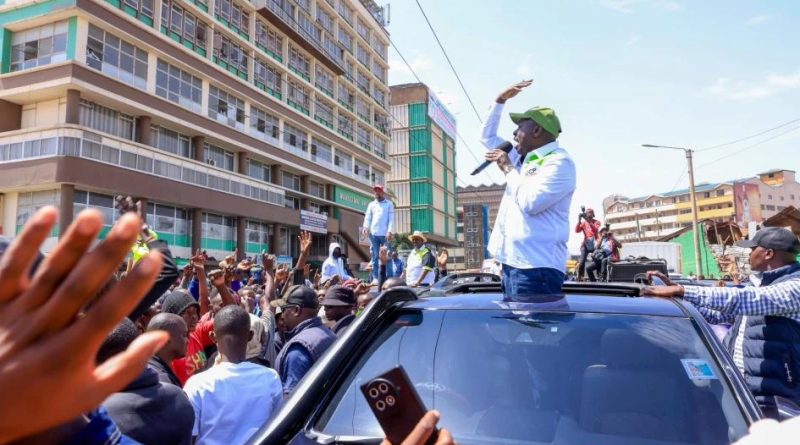
Today, as Kenya slowly edges toward the 2027 General Election, Mt Kenya is once again becoming the country’s most fiercely contested political battlefield.
The question is no longer whether politicians will fight for the region.
It is who will ultimately convince its voters that they deserve their trust.
The Region That Shapes Governments
Kenya has 47 counties, each with its own political dynamics. Yet election after election, Mt Kenya has remained one of the country’s most influential voting blocs.
The region—which broadly includes Nyeri, Murang’a, Kiambu, Kirinyaga, Nyandarua, Embu, Meru, Tharaka Nithi and parts of Laikipia—has consistently recorded some of the highest voter turnout rates in the country.
Unlike regions where voter participation fluctuates significantly, Mt Kenya’s electorate is widely regarded as highly organised and politically engaged.
High turnout means politicians cannot afford to ignore it.
Winning the region often provides the momentum needed to build a national coalition.
Why Every Leader Is Suddenly Spending More Time There
Over the past several months, political activity across Mt Kenya has intensified dramatically.
President William Ruto has repeatedly toured the region, commissioning projects, inspecting infrastructure and meeting local leaders. His administration continues to argue that development—not politics—should remain the region’s priority.
At the same time, former Deputy President Rigathi Gachagua has embarked on his own series of meetings and public engagements, positioning himself as a leading voice for the region after his fallout with the ruling coalition.
Opposition figures have also become increasingly active, sensing an opportunity to make gains in what was once considered difficult political territory.
The result is a political contest unlike any seen since the last General Election.
The Ol Kalou Shockwave
Nothing captured this shifting landscape more dramatically than the Ol Kalou parliamentary by-election.
On paper, it was simply an exercise to elect a new Member of Parliament following a vacancy.
In reality, it became something much bigger.
Senior political figures crisscrossed the constituency.
Campaigns intensified.
Every speech was analysed.
Every endorsement was scrutinised.
When voters eventually cast their ballots, many observers viewed the result as more than a local election.
Whether interpreted as a protest vote, a local contest or a broader political signal, the outcome immediately triggered nationwide debate about the state of politics in Mt Kenya and what it could mean for future elections.
That explains why political leaders across the spectrum reacted so quickly.
Sometimes a single constituency says more about public mood than dozens of opinion polls.
A New Generation of Voters Is Emerging
Perhaps the biggest change in Mt Kenya politics is not about politicians.
It is about voters.
Thousands of young Kenyans will be eligible to vote for the first time in 2027.
Many have grown up during periods of economic uncertainty, rising unemployment and rapidly changing technology.
Unlike previous generations, they consume political information through TikTok, YouTube, podcasts and WhatsApp rather than relying solely on traditional rallies or television news.
They also ask different questions.
Instead of asking which tribe a leader comes from, many want to know:
- Will I get a job?
- Can I afford to start a business?
- Why is the cost of living rising?
- What opportunities exist for young people?
These concerns are reshaping political campaigns.
The Economy Could Decide Everything
Political analysts often argue that elections are won through strategy.
Voters frequently argue something much simpler.
Their wallets.
For many households across Mt Kenya, conversations increasingly revolve around coffee prices, tea earnings, dairy farming, fertiliser costs, taxes, access to affordable credit and the general cost of living.
Small and medium-sized businesses—the backbone of the region’s economy—have also faced challenges ranging from rising operating costs to reduced consumer spending.
As a result, economic performance may prove more influential than campaign slogans.
Leaders who convincingly address household concerns could find themselves with a significant advantage.
Why Mt Kenya Matters Beyond Mt Kenya
The region’s importance extends beyond its own boundaries.
A strong performance in Mt Kenya often influences coalition-building across other regions.
Political parties seeking State House know that victory requires partnerships stretching from the Coast to Western Kenya, from Rift Valley to Nyanza.
But a commanding showing in Mt Kenya provides credibility, momentum and negotiating power.
It also attracts campaign financing, volunteers and media attention.
That explains why national politics often appears to revolve around developments in the region.
Campaigning Has Changed Forever
The next battle for Mt Kenya will not be fought only on stages and campaign trucks.
It will also play out on smartphones.
Political parties are investing heavily in digital campaigns, data analysis, influencer marketing and targeted messaging.
A viral TikTok clip can now reach more voters than a traditional rally.
WhatsApp groups have become neighbourhood campaign centres.
Facebook Live broadcasts attract thousands of viewers.
YouTube channels dissect speeches within minutes.
For politicians, controlling the online narrative has become almost as important as winning the ground campaign.
What Voters Are Really Looking For
Despite the noise surrounding political alignments, many residents consistently point to familiar priorities:
Reliable roads.
Affordable healthcare.
Quality education.
Access to markets.
Employment opportunities.
Lower living costs.
Improved security.
Political loyalty can change.
Daily needs rarely do.
That reality may become the defining issue of the next election cycle.
The Road to 2027 Has Already Begun
Although the General Election remains months away, Kenya’s political engine is already running.
Every by-election, every public rally, every policy announcement and every coalition meeting is now being viewed through the lens of 2027.
Mt Kenya sits at the centre of that conversation.
Not because the region alone decides elections, but because it often reflects broader national political trends.
The alliances built today, the promises made tomorrow and the trust earned over the coming months could determine who enters the next campaign with momentum—and who finds themselves struggling to catch up.
More Than Politics
Beyond campaign speeches and headline-grabbing rallies lies a deeper story.
The battle for Mt Kenya is ultimately a contest over ideas, economic recovery, public confidence and the future direction of the country.
For millions of voters, the decision will not simply be about personalities.
It will be about who offers the most convincing vision for improving livelihoods, expanding opportunities and restoring confidence in Kenya’s future.
As the countdown to 2027 continues, one thing is becoming increasingly clear:
The race for State House may be national, but one of its most decisive chapters is likely to be written in the towns, farms, markets and villages of Mt Kenya.