Lamu IEDs: Why Kenya’s Roads Remain a Frontline in the Security Battle
Most Kenyans will never know how many attacks were prevented before they became news.
They will hear about the explosion.
They will see the smoke.
They will learn the names of those killed or injured.
But they rarely hear about the roadside danger discovered just minutes or hours before tragedy.
That is what makes the latest security operation in Lamu County so significant.
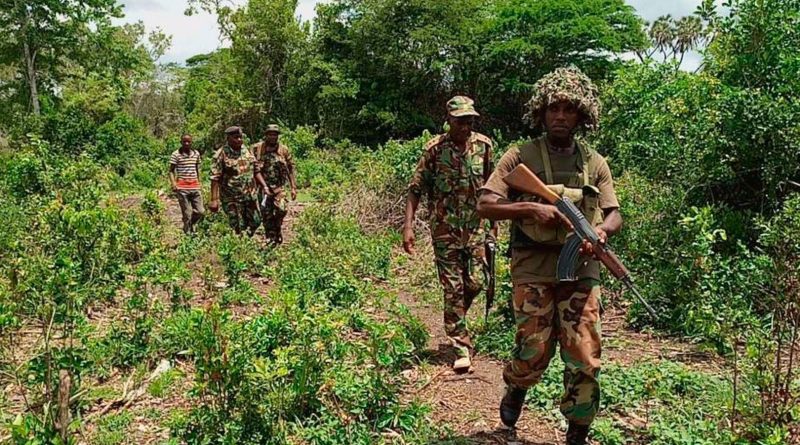
The Kenya Defence Forces says troops operating under Operation Amani Boni discovered and safely neutralised four improvised explosive devices concealed along major supply routes used by both security personnel and civilians. The devices were detected during route-clearance, dominance and intelligence-led operations.
No major explosion followed.
No mass casualty figure was announced.
No dramatic scene unfolded on a busy Kenyan highway.
And that is precisely the point.
The most important security story may be the one that never happens
The four devices were reportedly found before they could be detonated.
In one operation, troops detected a concealed pressure-plate device during patrols before it could be triggered. The area was secured and the device was destroyed in a controlled operation.
That may sound like a technical military success.
But for people living and working in the region, the significance is much more ordinary.
It means a road remains open.
A vehicle continues its journey.
A trader reaches a destination.
A family travels without ever knowing that something potentially deadly had been hidden nearby.
This is the unseen side of counterterrorism.
The public often measures security by what happened.
Security forces, however, must also measure it by what did not happen.
A road is never just a road in a conflict zone
In most parts of Kenya, a road is simply a road.
You use it to get to work.
To transport goods.
To visit family.
To travel between towns.
But in areas affected by militant activity, roads can become something much more important.
They become:
- supply lines;
- economic lifelines;
- routes for security operations;
- connections between isolated communities;
- and potential targets.
That is why the discovery of explosives along key routes matters beyond the immediate operation.
An attack on a road is not necessarily aimed at one vehicle.
It can be aimed at movement itself.
At the confidence of residents.
At businesses operating in the region.
At the sense that people can travel without fear.
The real battle is often about confidence
Terrorism does not always need to cause mass casualties to create disruption.
Sometimes the objective is simpler.
Make people afraid.
Make drivers hesitate.
Make businesses reconsider operating in a region.
Make communities feel abandoned.
Make every suspicious object beside a road appear dangerous.
That is why successful route-clearance operations have significance beyond the explosives themselves.
The KDF says its ongoing operations are intended not only to protect military personnel but also to secure routes used by local communities and businesses and preserve socio-economic activity in the region.
In other words, the battle is not only about preventing an attack.
It is also about protecting the ability of ordinary life to continue.
Why Lamu remains strategically important
Lamu is not just another county on Kenya’s map.
It is home to communities, tourism, agriculture, major transport corridors and strategically important infrastructure.
Its location near the Kenya-Somalia border has also made parts of the region a long-running security concern.
That combination makes stability especially important.
When insecurity affects a remote road, the consequences can travel much further than the immediate location.
A disrupted route can affect:
- transport;
- trade;
- access to markets;
- security operations;
- tourism;
- investment;
- and the movement of essential goods.
The road may be physically narrow.
But its importance can be enormous.
The uncomfortable lesson from the four devices
The discovery of four IEDs should not simply produce a momentary wave of headlines before the country moves on to the next story.
It should force a deeper question:
How many threats are detected before they become attacks — and how many are discovered too late?
The answer is not publicly known.
Nor should operational details that could compromise security necessarily be made public.
But the broader reality is clear: the battle against terrorism is often won through patience, intelligence, vigilance and routine operations that rarely become viral.
The public sees the successful explosion.
It rarely sees the bomb that was found before the explosion.
The quiet victories matter
There is a tendency to think of security only in dramatic terms.
A major arrest.
A terrorist attack.
A military operation.
A national alert.
But security is also built through smaller, less visible victories.
A patrol that notices something unusual.
A soldier who recognises a suspicious pattern.
An intelligence report that reaches the right people.
A route that is cleared before civilians use it.
A device that is destroyed before anyone has to ask who was inside the vehicle when it exploded.
These are the stories that rarely dominate social media.
But they may be among the most important stories in the country.
The war on Kenya’s roads is also a battle for Kenya’s future
The security of a road affects more than the people travelling on it.
It affects whether businesses are willing to invest.
Whether farmers can move produce.
Whether traders can reach markets.
Whether communities feel connected to the rest of the country.
Whether families believe that normal life is possible.
That is why the Lamu operation should be understood as more than a story about four explosives.
It is a reminder that security and development are deeply connected.
A road cannot fully serve as an economic lifeline if people are afraid to use it.
A region cannot fully unlock its potential if insecurity keeps interrupting movement.
And a country cannot build lasting prosperity if its people are constantly forced to calculate the risks of simply getting from one place to another.
The most powerful headline may be the one Kenya never gets to write
The most frightening headline would have been:
“Deadly Explosion Hits Route in Lamu.”
Instead, the story is:
Four devices were found.
That difference matters.
Because sometimes the greatest security success is not the dramatic rescue after disaster.
It is the disaster that never happens.
The vehicle that never explodes.
The family that reaches home.
The trader who continues travelling.
The road that remains open.
And the people who will never know how close they may have come to becoming part of a story that was prevented before it began.
Kenya’s security battle is not always fought in the headlines.
Sometimes, it is fought quietly on the roads — before the first explosion ever comes.