A War Thousands of Kilometres Away Could Make Life in Kenya More Expensive
For most Kenyans, the war between the United States and Iran exists somewhere far away.
It is watched through television screens, mobile phones and social media updates.
The missiles are not falling in Nairobi. The explosions are not being heard in Mombasa. There are no sirens in Kisumu or Eldoret.
But the modern economy has a way of bringing distant wars home.
Sometimes, it does not arrive as a soldier.
It arrives as a more expensive litre of fuel.
A higher matatu fare.
A more expensive loaf of bread.
A bigger electricity bill.
And eventually, a salary that no longer stretches as far as it did before.
The question Kenyans should be asking is not whether the war is far away
The real question is:
How long before the war begins to affect the price of everyday life in Kenya?
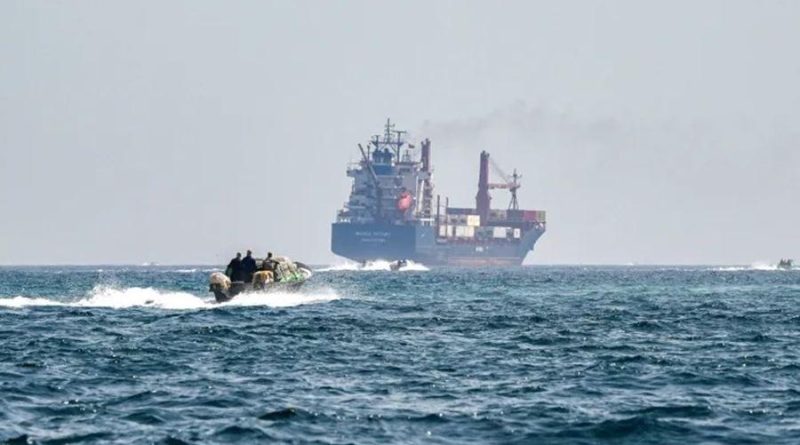
The answer depends largely on what happens in one of the world’s most important maritime chokepoints — the Strait of Hormuz.
The narrow waterway is a crucial route for global energy shipments. Any prolonged disruption to shipping through the strait can quickly unsettle oil markets, pushing prices higher as traders worry about whether enough crude will reach the global market.
That is where Kenya’s vulnerability begins.
Kenya imports the overwhelming majority of the petroleum products that power its economy.
The fuel that moves a truck from Mombasa to Nairobi is connected to a global market.
The diesel that powers agriculture is connected to a global market.
The fuel used to transport food from farms to towns is connected to a global market.
And when the price of oil rises sharply, the shock rarely stops at the petrol station.
Fuel is the first domino
A higher international oil price does not automatically mean that Kenyan motorists wake up the next morning to a massive increase at the pump.
Kenya has systems designed to cushion consumers from sudden global price shocks.
Indeed, the government has previously used stabilisation measures and tax interventions to shield consumers from global fuel volatility.
EPRA also recently maintained the maximum retail prices for petrol, diesel and kerosene for the July 15–August 14 pricing cycle, despite continued volatility in international oil markets.
But cushioning consumers is not the same thing as eliminating the cost.
At some point, someone has to absorb the shock.
It may be:
- the government through subsidies or stabilisation measures;
- oil companies through reduced margins;
- businesses through higher operating costs;
- or consumers through higher prices.
And the longer an energy crisis lasts, the harder it becomes to shield everyone indefinitely.
Why diesel matters more to Kenya than most people realise
When Kenyans hear “fuel prices,” many immediately think about the cost of filling a private car.
But diesel is arguably even more important to the wider economy.
It powers trucks.
It moves agricultural produce.
It supports construction.
It fuels machinery.
It drives logistics.
It helps move goods across a country where almost everything people buy has travelled by road at some point.
This is why a major diesel shock can spread through the economy much faster than many people realise.
A trader may never buy a litre of diesel.
But the food in their shop may have travelled in a diesel-powered truck.
A family may not own a lorry.
But the price of transporting goods eventually appears in the price paid by the consumer.
This is how a conflict in the Middle East can eventually become a conversation in a Nairobi household:
“Why has everything become so expensive again?”
The last major fuel shock showed Kenya’s exposure
Kenya has already experienced how global oil volatility can create domestic economic pain.
In May 2026, the Kenya National Chamber of Commerce and Industry warned that rising fuel costs were threatening business competitiveness, with diesel particularly important to transport, agriculture, manufacturing, logistics and construction.
That is the key lesson.
The danger is not simply that petrol becomes more expensive.
The danger is that the entire cost of moving the economy begins to rise.
The Kenyan shilling is another part of the story
There is also a currency dimension.
Kenya pays for imported petroleum in foreign currency. A global energy shock can therefore create additional pressure on the country’s import bill and foreign-exchange requirements.
If oil prices rise significantly and remain elevated, Kenya could face greater pressure on the balance of payments and the shilling.
That can create a second layer of pain.
Even when the price of a product has not changed dramatically in international markets, a weaker currency can make imports more expensive for Kenya.
The result is a potentially uncomfortable combination:
more expensive oil + more expensive dollars = greater pressure on the Kenyan economy.
But there is another side to the story
Kenya is not completely powerless.
The country’s fuel supply arrangements, strategic interventions and pricing systems can provide some protection from sudden shocks.
The government has already demonstrated that it is willing to use public funds and tax measures to cushion consumers when fuel prices surge.
But there is a limit to every cushion.
A government can delay the impact.
It can spread the cost.
It can absorb part of the increase.
But it cannot permanently make global oil shocks disappear.
That is why the most important question may not be:
“Will fuel prices rise?”
It may be:
“How long will the conflict last?”
A short-lived crisis may produce a temporary market shock.
A prolonged disruption to energy shipments could create a much more serious global problem.
The war could change even if Kenya is never directly involved
This is the uncomfortable reality of the modern world.
Kenya does not need to send soldiers to the Middle East to be affected by a war there.
It does not need to take sides.
It does not need to be directly targeted.
The global economy is now too connected.
A disruption in one of the world’s most important oil corridors can be felt by a truck driver in Nairobi, a farmer in Nakuru, a trader in Mombasa and a family trying to stretch a monthly budget in Kisumu.
The distance between Iran and Kenya may be thousands of kilometres.
But the distance between a global oil shock and the Kenyan consumer could be much shorter.
The warning for Kenya
For now, the immediate story is the war.
The bigger story is what the war could trigger.
The world has seen this pattern before.
A geopolitical crisis begins.
Oil markets react.
Transport costs rise.
Businesses adjust prices.
Households begin cutting back.
And eventually, a conflict that began on the other side of the world becomes part of the local cost-of-living conversation.
That is why Kenyans should be watching not only the missiles, the military statements and the diplomatic negotiations.
They should also be watching:
- the price of Brent crude;
- shipping through the Strait of Hormuz;
- the Kenya shilling;
- EPRA’s next fuel review;
- transport costs;
- and the government’s ability to continue cushioning consumers.
Because the next major consequence of the US-Iran conflict may not arrive in Kenya as breaking news.
It may arrive quietly.
At a petrol station.
In a supermarket.
On a matatu.
Or in the monthly household budget.
The war may be thousands of kilometres away.
But the price of the war could travel much farther than the bombs.